There is an incredible movement raising awareness and addressing adverse childhood experiences or A.C.E.s and the devastating lifelong physical and mental consequences of growing up with toxic stress. Scientific advances have made significant achievements in preventing and healing childhood trauma resulting from high A.C.E. scores. Adverse childhood experiences have recently been recognized as a Public Health Crisis by the U.S. House Oversite Committee.
Millions of dollars in grants are being allocated to help combat this Public Health Crisis. Despite all the work identifying and treating A.C.E.s and the resulting health consequences, there is a vital component that is lacking — addressing the adult (buffers) developmental trauma disorders.
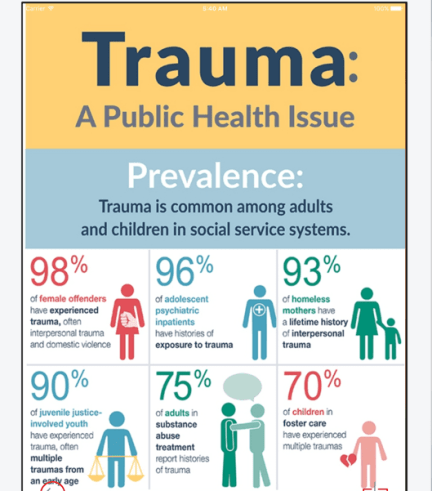
Developmental trauma disorder D.T.D. or Complex post-traumatic stress disorder can result from growing up with a lot of adversity over a long period during one’s most formative years. Trauma and the changes it makes to your brain affect your perception of yourself and your environment, which dictates your behavior. A person that suffers from Developmental Trauma Disorder without any awareness is commonly misdiagnosed with a different disorder. As a result, treatments are ineffective.
Renowned traumatologist, John Briere, is said to have quipped that if Complex PTSD were ever given its due – that is, if the role of dysfunctional parenting in adult psychological disorders was ever fully recognized, the DSM (The Diagnostic and Statistical Manual of Mental Disorders used by all mental health professionals) would shrink to the size of a thin pamphlet. It currently resembles a large dictionary. In my experience, many clients with Complex P.T.S.D. have been misdiagnosed with various anxiety and depressive disorders, as well as bipolar, narcissistic, codependent and borderline disorders. Further confusion arises in the case of A.D.H.D. (Attention Deficit Hyperactive Disorder), as well as obsessive/compulsive disorder, which is sometimes more accurately described as an excessive, fixated flight response to trauma. This is also true of ADD (Attention Deficit Disorder) and some dissociative disorders which are similarly excessive, fixated freeze responses to trauma. (http://pete-walker.com/fAQsComplexPTSD.html)
The A.C.E. movement is still relatively new; it has only recently gained the attention and momentum it deserves, and as a result, scientists are learning more every day. Adverse Communities are finally being recognized as a contributor to individuals high A.C.E. scores. The initial A.C.E. questionnaire has been expanded to include questions to identify multiple additional risk factors.
Studies show that abuse, dysfunction, mental illness, addiction, and poverty are inter-generational. It is only logical that adults suffering from D.T.D./C.P.T.S.D. are treated effectively. An adult that is suffering from an untreated disease cannot be an appropriate buffer for a child, and they can not break cycles of abuse that have lasted for generations. Diagnosing and treating developmental trauma disorders is the missing link to creating generations of healthier, happier generations of people.
 Resources for Healing Trauma
yes trauma is the gateway drug!! exactly so true. time to end the shame and confusion.
LikeLiked by 1 person
So very true and it’s a shame that nowadays schools aren’t doing anything to help to protect our children. Their response when our children are being bullied and assaulted is to “get in the fetal position and let the attacker do what their doing” … “if you can’t shield yourself, push them away and run for help”. ARE YOU SERIOUS?! That’s not doing anything to help our children, instead that’s helping to teach our children to be better victims. It’s teaching our children and their attackers to make them repeat victims! Something needs to change. Something needs to be done to help keep our children safe, to protect them and their future! School policies need to change!
#UnionvilleSebewaingAreaSchoolDistrictPolicyNeedsChanging
#HelpOurChildren BEFORE IT’S TOO LATE!
LikeLike